Self-study
The conventional education system forces children to learn and do homework at the same pace as their classmates. Online courses can be developed at your own pace. Online learning helps children to enjoy an individualized approach to learning to meet their needs, as well as to meet the standards required in learning the material.
Self-discipline
Children learning online take responsibility for training and personal development courses for which learning and success are highly valued. In short, your child's success depends on himself.
No geographical barriers
Online learning breaks down geographical barriers by enabling children to connect with peers and teachers around the world.
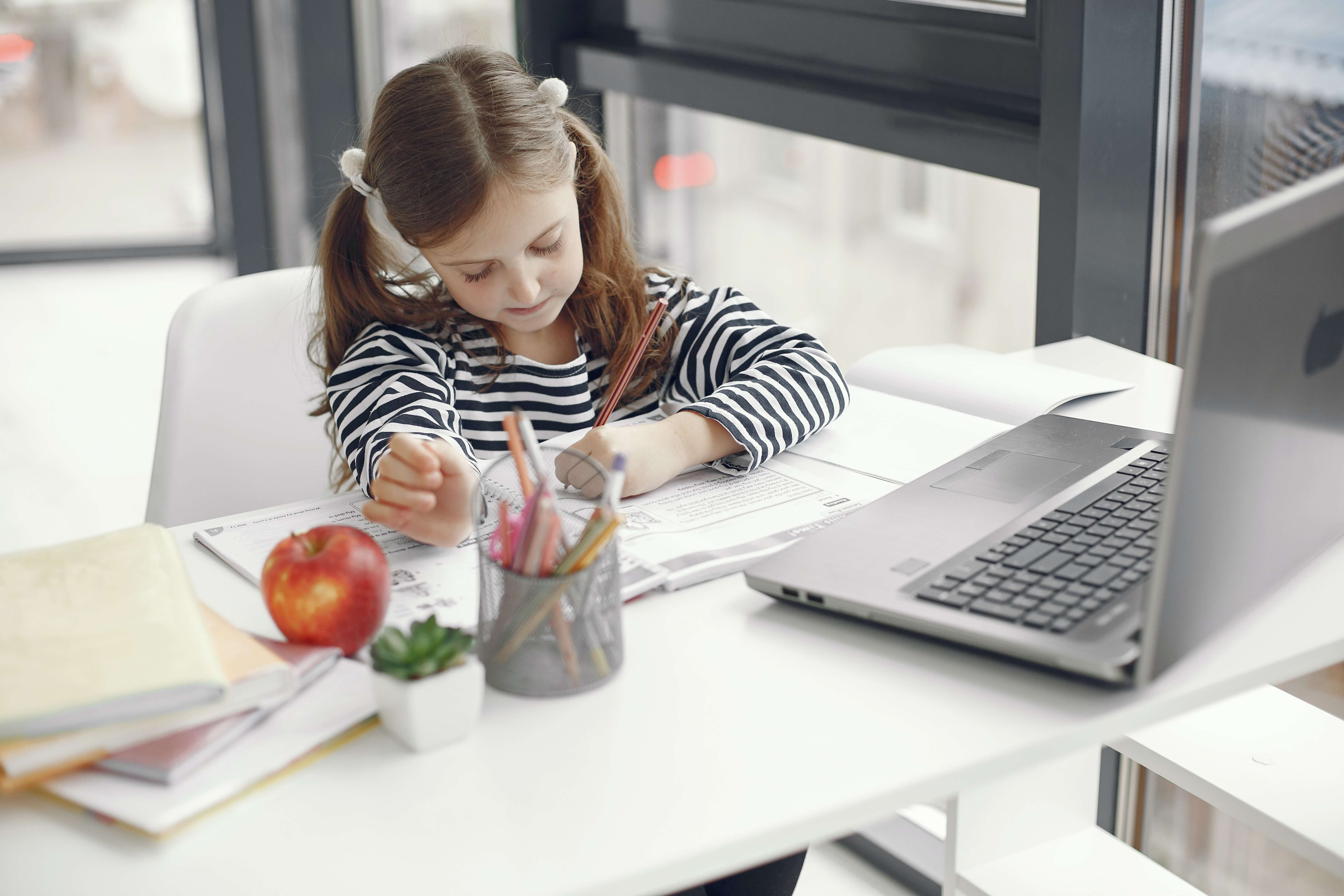
Faster and more convenient learning
As children start from the comfort of their home and do not spend time traveling and other related activities, they can spend more time on real learning. In this way, they start quickly compared to conventional ways of learning.
Custom graphics
The main advantage of online training is that it allows for flexible schedules and leisure training. This allows children to continue their other activities without sacrificing their education. Every child can play sports and after returning home continue their education online.
Children are less likely to be distracted during training In traditional classes, students focus less on learning and are more influenced by being surrounded by peers. Teachers spend a lot of time dealing with students' behavioral problems and this reduces the time for teaching and exercises. Through online learning, children will avoid distractions and focus only on learning.
New technical skills
In an age where children are not growing up, technical and computer skills are a must to survive. Online learning helps children understand technology at an early stage in their lives. During the training, children move through the lessons of the course, handle online materials, interact online, upload tasks and communicate digitally. All this helps them to learn new technical skills that will be very useful in later stages of life.
The parent can be actively involved in the learning process When parents are part of the learning process, it motivates children to learn quickly and effectively. Parents know their children's strengths and weaknesses and can become learning partners for their children.